
MetsXMFanZone News
Vientos, Baty and the Non-Tender Clock: The Mets Have a Lockout-Shaped Deadline
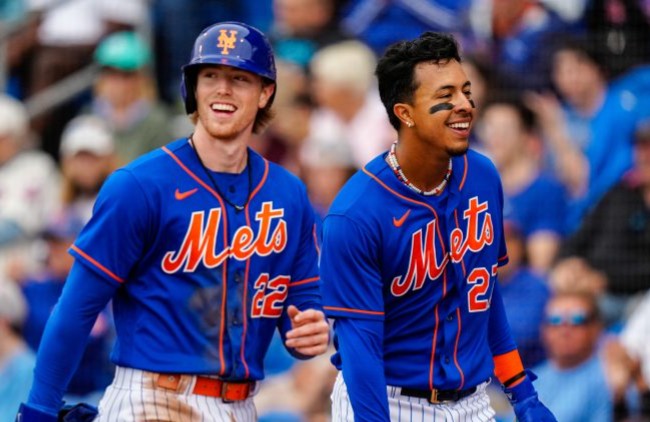
The Mets face non-tender decisions on Mark Vientos, Brett Baty, Tylor Megill and more with a likely December 1 lockout looming. Here is who should stay and what to watch.
Every fan is staring at the free-agent board right now, dreaming about arms and bats from outside the building. I want to talk about a quieter clock that is ticking louder than any of that: the non-tender deadline, and the very real possibility that the Mets have to make their roster choices before a lockout freezes everything.
Here is the calendar as it stands. The general managers gather in Las Vegas in the second week of November. The window to tender contracts to arbitration-eligible players closes around the 20th. Then on December 1 the collective bargaining agreement expires, and an owner lockout is widely expected. Once that happens, business involving 40-man roster players goes dark. So the Mets effectively have about three weeks to settle who stays, who goes, and who gets traded, with no safety net after that.
That timing turns a routine paperwork deadline into a real strategic problem. Normally a team can tender a borderline player, shop him in December, and release him in spring if nobody bites. A work stoppage could make that slow-play approach a lot riskier.
The name that jumps out for me is Mark Vientos. He is arbitration-eligible for the first time after earning close to the league minimum, which means his salary is about to jump. His season was bumpy: a fractured right hand put him on the injured list in mid-July, he came back on August 31, and in September he started only three of the club's first 15 games that month. Still, he was OPS-ing .885 against lefties going into the September 18 game, and he told MLB.com, "Of course I want to be a New York Met." I believe him. The question is whether the Mets believe a platoon bat is worth a raise.
My take: tender him. A right-handed hitter who can punish left-handed pitching is exactly the kind of cheap, useful piece a lineup needs, and the Mets just parted ways with their top hitting minds in the organization. Moving on from a power bat right as you rebuild the offensive approach feels backwards. If the price looks steep, tendering and then trading him is an option, and so is simply carrying him as a bench weapon.
The same group includes Brett Baty, Francisco Alvarez, Ronny Mauricio, Tylor Megill, Reed Garrett and a few bullpen arms. Alvarez is not going anywhere, and I would expect Baty to stick around too, especially with the late-season shortstop experiment still fresh. Megill is the one SNY has already flagged as a legitimate non-tender candidate, and that tracks for a pitcher who has been more depth than difference-maker.
Now the bigger picture. Bo Bichette is the lone potential Mets free agent, holding player options, and the front office has other questions to answer too, like first base and the rotation. Every roster spot spent on a marginal arbitration guy is a spot not available for something better. Every dollar is a dollar for the winter's big swing. That is why this deadline matters more than its low profile suggests.
What I am watching next: first, whether the Mets move early on trades involving arbitration players before the Vegas meetings wrap up. Second, whether any non-tender names show up quickly, because those players hit the market all at once and other teams pounce. Third, any word on how the front office plans to operate if the lockout lands. Steve Cohen has talked about wanting the right voices in the building. This is the first real test of whether those voices can plan around a calendar that might shut down on December 1.
Let's go Mets. Tell me in the comments: who is your must-tender and who is your must-go?