Mets News
Bichette Stays: What a $42 Million Decision Means for the Mets in 2027
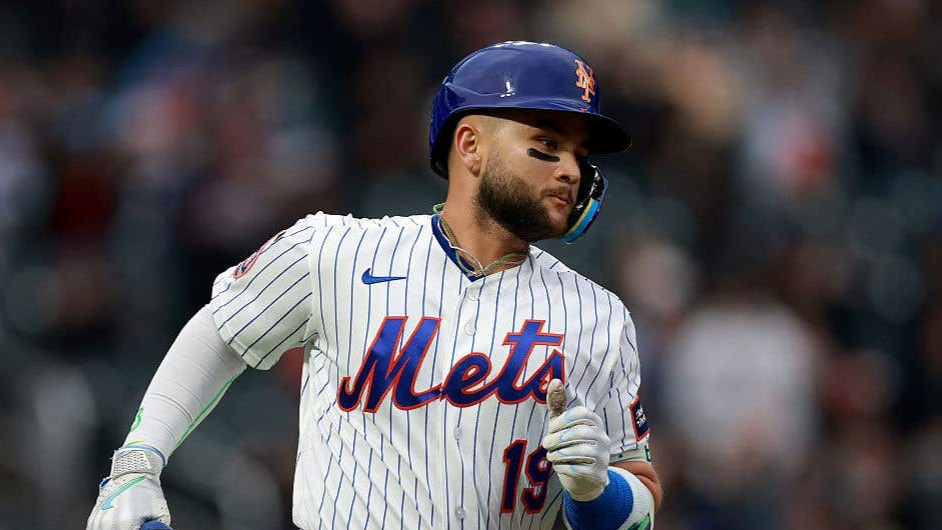
Reports say Bo Bichette is exercising his $42 million option to stay with the Mets in 2027. Here is what it means for third base, the lineup and the pitching hunt.
Bo Bichette is staying put. Reports on October 29 say he is exercising his $42 million player option for 2027, which takes him off the market and keeps him in Queens. Neither the team nor Bichette had confirmed it as of this writing, but with multiple outlets pointing the same direction, Mets fans should treat it as the plan.
Let's be real about the reaction. Some of you are relieved. Some of you are annoyed that $42 million is going to a guy who hit .260/.312/.390 with 18 homers and 78 RBI over 160 games in his first Mets season. Both feelings are fair, and I think the truth sits in the middle.
Start with the context nobody should skip: this was Bichette's first year at third base. He moved off the infield spot he had always known and learned a new position while adapting to a new city, new pitchers and a new set of expectations. That is a lot to carry, and the early numbers showed it. His OPS sat around .583 through May. Over the final four months it climbed to roughly .772. That is not a superstar line, but it is a very different hitter than the one we watched in April.
That trend is the whole argument for 2027. If a player of his track record, a two-time All-Star, gets a full spring and a full offseason at the hot corner without learning on the fly, it is reasonable to expect more than a league-average bat. I am not promising MVP votes. I am saying the second-half version of Bichette is the one I would bet on seeing more of.
Now the other side. Forty-two million dollars buys a lot of expectations. A .312 on-base percentage is not what you want from a core lineup piece, and the Mets cannot afford to carry another season of cold stretches in the middle of the order. With the hitting coach job open after the staff changes this month, the next person in that role has a clear first project: get Bichette's approach working from day one.
There is also a timing benefit to this decision. Because Bichette is no longer a question mark, the front office can plan around him. Third base is settled, and that frees Stearns and company to put their attention on the holes that are still open, starting with the rotation. One free agent worth watching is Michael King, who declined his option with San Diego and hit the market. He posted a 3.21 ERA with 159 strikeouts across 185 innings in 32 starts this year, and the Mets already had a video meeting with him last winter, per the New York Post's Joel Sherman. Health is the caveat, since he made only 15 starts in 2025. But for a club that needs innings, he is a name that fits.
Bichette's second option for 2028 is also worth $42 million, so this is not necessarily a one-year story. If 2027 goes well, the Mets could have him through two more seasons without a new negotiation. If it goes poorly, the same structure means the team has to live with it. That is the tradeoff of a player-friendly contract, and it is why this season matters so much for his standing with the fan base.
My take: this is a fine outcome, not a thrilling one. The Mets keep a veteran infielder with a proven bat, a position change behind him and a strong second half to build on. The real question is whether the lineup around him gets better. Keeping Bichette is the floor for the offseason. It cannot be the ceiling.
What to watch next: the official confirmation from the club, the choice of a new hitting coach, and whether the Mets make a real push for pitching when free agency opens. Those three things will tell us far more about 2027 than one option decision does.
What do you think, MetsXMFanZone family? Is Bichette a bounce-back candidate at third, or is $42 million too much for what we saw? Sound off in the comments.