General
MLB Loss a Legend at 84 Wilbur Wood
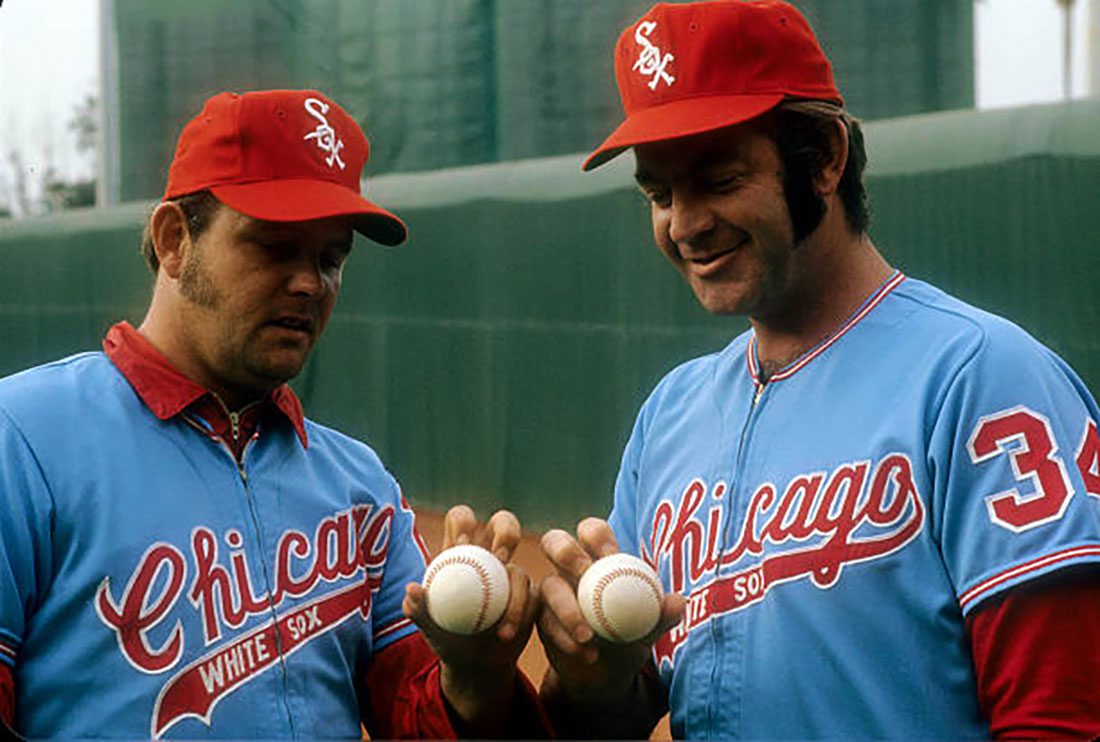
Remembering Wilbur Wood, the knuckleball king who defied modern logic. Relive the legacy of MLB’s last true iron man and his legendary endurance.
In an era of baseball defined by triple-digit velocities and meticulously managed pitch counts, the passing of Wilbur Wood at age 84 feels like the final closing of a heavy, leather-bound book on a different species of pitcher. To look at Wood’s career marks is to stare into a statistical abyss that modern analytics simply cannot comprehend. We are mourning more than just a left-handed knuckleballer; we are mourning the last true iron man of the mound, a player who treated the concept of fatigue as a mere suggestion rather than a physical law.
While the modern starter celebrates reaching 200 innings in a season, Wood once treated that number as a mid-summer checkpoint. Between 1971 and 1975, the man was a walking anomaly for the Chicago White Sox. The perspective we often miss when discussing Wood is not just the volume of his work, but the psychological warfare he waged. He didn't overpower hitters with a blazing heater; he dismantled their dignity with a pitch that moved like a butterfly caught in a gale. In 1972, he pitched 376.2 innings. To put that in perspective, a modern ace would need nearly two full seasons to match the workload Wood endured in a single turn of the calendar. He was a relic of endurance, a human rubber band who proved that the knuckleball wasn’t just a gimmick, but a weapon of mass destruction when commanded by a master.
The most jarring aspect of Wood’s legacy is the sheer audacity of his 1973 season, a year that stands as a permanent middle finger to the concept of specialization. That July, Wood started both games of a doubleheader against the New York Yankees. He didn't just appear in both; he started them. While he ended up losing both ends of the twin bill, the feat remains a testament to a mindset that has vanished from the dugout. Wood understood the physics of his craft better than almost anyone. Because the knuckleball required so little maximum effort from the arm, he viewed himself as an everyday player who just happened to stand sixty feet, six inches away. He finished that 1973 season with 24 wins and 20 losses, a stat line that looks like a typographical error to the modern eye but perfectly encapsulates a man who was always willing to take the ball, regardless of the stakes or the strain.
Beyond the box scores, Wood represented a specific kind of blue-collar excellence that resonated deeply with the South Side of Chicago. He didn't look like a Greek god; he looked like the guy who might fix your radiator or sit next to you at a corner tap. Yet, on the mound, he was a technician of the highest order. He transitioned from a struggling traditional pitcher into a three-time All-Star by embracing the chaos of the knuckler. It was a transformation that required immense humility and even more patience. He proved that longevity in baseball isn't always about being the strongest or the fastest; sometimes, it is about being the most adaptable. His three consecutive 20-win seasons in the early seventies weren't just products of volume; they were products of a pitcher who had mastered the art of the soft landing.
As we reflect on Wilbur Wood’s life, we shouldn't just talk about the 164 career wins or the 3.24 career ERA. We should talk about the disappearance of the workhorse. Wood was the bridge between the golden age of the complete game and the dawn of the situational reliever. He occupied a space in the game where one man could carry the weight of an entire staff on his left shoulder, fluttering his way through nine innings while the sun set over Comiskey Park.
His passing leaves a void in the history of the game that can't be filled by radar gun readings or spin rate metrics. Wood was a reminder that baseball is, at its heart, a game of guile and grit. He didn't just throw a baseball; he manipulated the air around it. As the game moves further toward a future of restricted usage and scientific optimization, Wilbur Wood remains a towering, eccentric monument to what a pitcher can achieve when he refuses to ever say he has had enough. We won't see his kind again, and perhaps that is why his loss feels so heavy today. The knuckleball may still occasionally dance toward home plate, but the man who made it a marathon event has finally taken his rest.