Mets Talks
Mets are out of Cody Bellinger
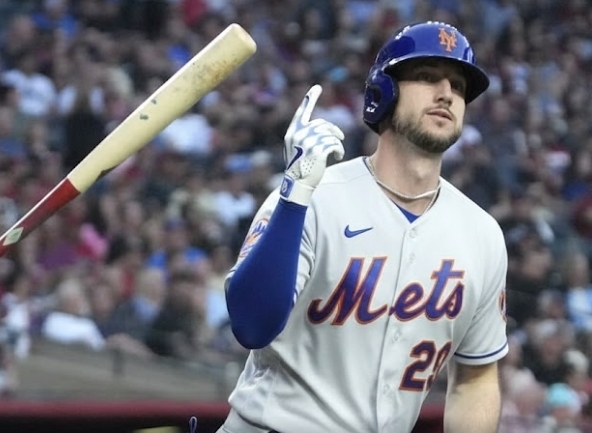
The reasons for the Mets’ apparent withdrawal are multifaceted, but most of them circle back to two main factors: money and roster construction.
The New York Mets, at least for now, seem to have closed the book on the possibility of Cody Bellinger patrolling center field or first base at Citi Field in 2026. This isn't exactly groundbreaking news coming from Flushing, as the buzz connecting Bellinger to Queens had been steadily fading in recent weeks. However, the official word, or at least the strong implication from various reports, confirms what many fans had already suspected: the marriage between the power-hitting, Gold Glove-caliber outfielder and the Mets isn't happening.
For months, Bellinger remained one of the marquee names on the free-agent market, a tantalizing option for any team seeking a left-handed bat with pop and defensive versatility. His resurgent 2023 campaign with the Chicago Cubs, where he slashed .307/.356/.525 with 26 home runs and 97 RBIs, reminded everyone of the MVP-caliber talent he displayed in 2019. This performance positioned him for a significant long-term deal, precisely the kind of contract that appears to have given the Mets pause.
The reasons for the Mets’ apparent withdrawal are multifaceted, but most of them circle back to two main factors: money and roster construction. Owner Steve Cohen has shown a willingness to spend, an undeniable truth that has redefined the Mets’ financial landscape. However, even with an open checkbook, there are limits and strategic considerations. Bellinger, represented by Scott Boras, was reportedly seeking a deal in the neighborhood of nine or ten years, potentially exceeding $200 million. While Bellinger is undeniably talented, his injury history and the significant dip in performance between 2020 and 2022 likely made the Mets front office hesitant to commit such a monumental sum over a decade. The risk-reward ratio, particularly concerning long-term health and consistent production, seems to have been too skewed for their comfort.
Furthermore, the Mets' current roster configuration plays a significant role. With Francisco Lindor at shortstop, Jeff McNeil at second, and Pete Alonso at first base, the infield is largely set. The outfield, while having some question marks, also features established players. Brandon Nimmo is squarely in center field, and Starling Marte, despite his age and recent struggles, is expected to hold down a corner spot. The team also acquired Harrison Bader, another Gold Glove center fielder, as a lower-cost option for defensive stability, and retained DJ Stewart. While Bellinger could play first base, that would potentially block prospect Luke Voit or require a move for Pete Alonso, neither of which seems to be a priority for the Mets right now. Integrating Bellinger at his price tag would necessitate shuffling multiple pieces, a task the Mets brass seems unwilling to undertake given their current strategy of building around a strong core while also developing prospects.
This decision also seems to align with the more measured and strategic approach taken by David Stearns in his first offseason as President of Baseball Operations. Instead of making big, splashy signings, Stearns has focused on adding depth, improving the bullpen, and maintaining financial flexibility for future moves, perhaps even for the trade deadline. The acquisitions of players like Sean Manaea, Luis Severino, and Harrison Bader, while impactful, are not on the same scale as a potential Bellinger signing. This points to a longer-term vision, one that prioritizes sustained success through smart investments rather than singular blockbuster deals.
So, where does this leave the Mets? They still have money to spend and could pivot to other available options, though the remaining free-agent market for top-tier everyday players is thinning. More likely, they will continue to look for value, perhaps in smaller bullpen additions or by monitoring the trade market as Spring Training progresses. While the dream of Cody Bellinger wearing blue and orange will remain just that—a dream—for Mets fans, the team's decision reflects a strategic calm rather than a lack of intent. It suggests a calculated approach to roster building, one that prioritizes sustainability and long-term competitiveness over a single, high-stakes gamble. For now, the Mets are moving forward without Bellinger, and the baseball world will be watching to see if Stearns’ measured approach ultimately pays off.